


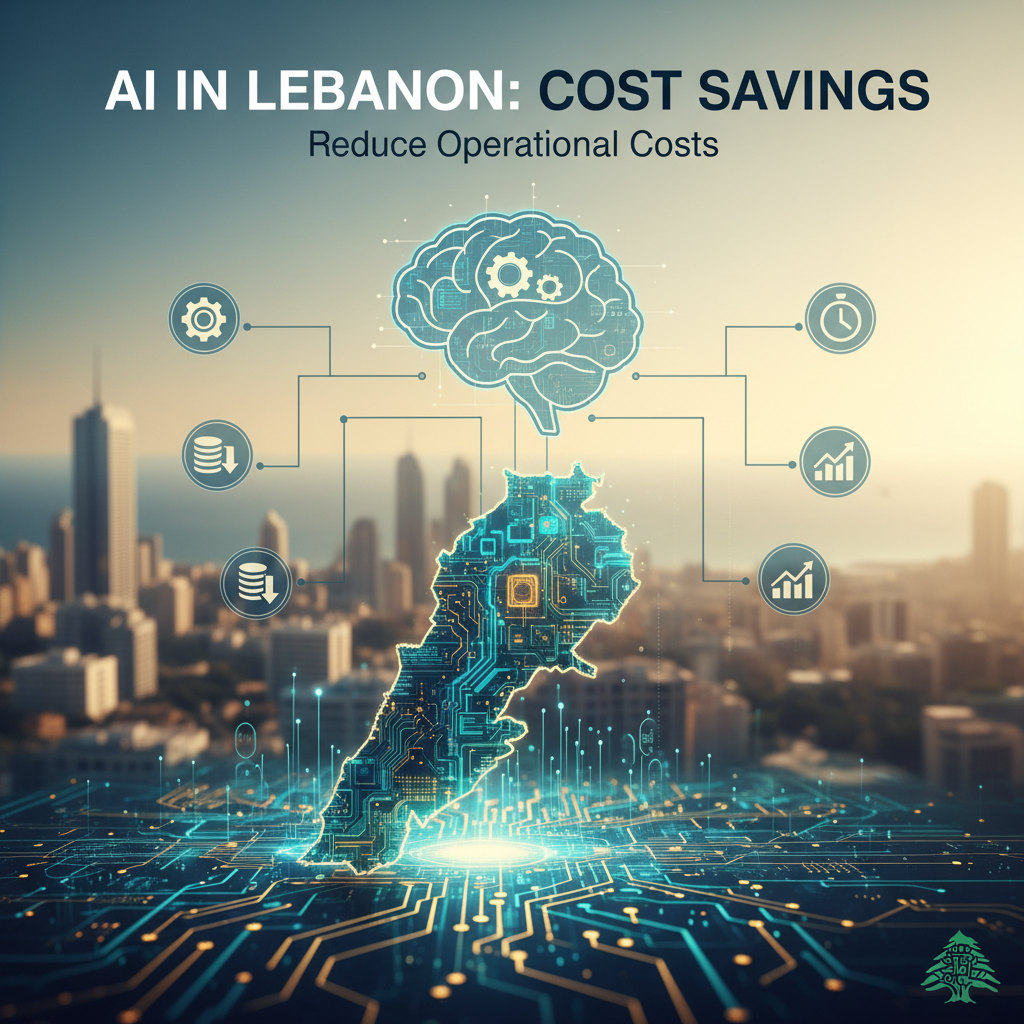
How Lebanese Companies Can Use AI to Drastically Reduce Operational Costs
In an ever-evolving global market, and particularly within Lebanon’s challenging economic landscape, businesses are under immense pressure to optimize their operations and maintain profitability. Artificial Intelligence (AI) is no longer a futuristic concept but a powerful, accessible tool that offers a tangible solution for Lebanese companies looking to significantly reduce operational costs and enhance efficiency.
From automating mundane tasks to predicting maintenance needs, AI provides innovative pathways to streamline processes, minimize waste, and make smarter, data-driven decisions. Let’s explore how companies in Lebanon can harness the power of AI to transform their cost structures.
Why AI is Crucial for Lebanese Businesses Now
The current economic climate in Lebanon demands resilience, innovation, and strategic cost-cutting measures. Traditional methods often fall short in delivering the sustainable savings required. AI, however, offers a unique opportunity to:
* **Boost Efficiency:** Automate repetitive tasks, freeing up human resources for more strategic work.
* **Reduce Waste:** Optimize resource allocation, inventory, and energy consumption.
* **Enhance Decision-Making:** Provide data-driven insights to identify cost-saving opportunities.
* **Improve Competitiveness:** Allow local businesses to compete more effectively by lowering their operational footprint.
Key AI Applications for Operational Cost Reduction in Lebanon
Here are some practical ways Lebanese companies can leverage AI to cut down expenses:
1. Streamlining Operations with AI-Powered Automation
Many operational costs stem from manual processes, human error, and time-consuming administrative tasks. AI-powered Robotic Process Automation (RPA) can mimic human actions to automate these repetitive tasks, such as:
* **Data Entry and Processing:** Automating invoice processing, payroll, and customer information updates.
* **Report Generation:** Automatically compiling data and generating regular business reports.
* **Compliance Checks:** Ensuring regulatory adherence without manual oversight.
By implementing RPA, Lebanese companies can reduce labor costs, minimize errors, and accelerate operational workflows, leading to significant savings.
2. Predictive Maintenance: Saving on Repairs and Downtime
Equipment breakdowns can be incredibly costly, leading to expensive emergency repairs, production downtime, and missed deadlines. AI-powered predictive maintenance uses sensors and machine learning algorithms to monitor equipment performance in real-time.
* **Early Anomaly Detection:** AI can detect subtle changes in machinery that indicate potential failure long before it occurs.
* **Optimized Maintenance Schedules:** Instead of fixed, time-based maintenance, AI allows for maintenance only when truly needed, reducing unnecessary service costs and extending asset life.
For Lebanese manufacturers, logistics companies, or even hotels, predictive maintenance can drastically cut repair bills and prevent revenue loss due to unforeseen stoppages.
3. Optimizing Supply Chains and Inventory Management
Inefficient supply chains and excessive inventory levels tie up capital and incur storage costs. AI can revolutionize how Lebanese businesses manage their supply chains:
* **Demand Forecasting:** AI algorithms analyze historical sales data, market trends, and even social media sentiment to predict future demand with higher accuracy, preventing overstocking or stockouts.
* **Route Optimization:** For delivery services, AI can calculate the most efficient routes, reducing fuel consumption and delivery times.
* **Supplier Management:** AI can help identify the most cost-effective and reliable suppliers.
This translates to reduced inventory holding costs, less waste, and more efficient logistics, critical for businesses operating in an import-dependent economy.
4. Enhancing Customer Service with AI Chatbots and Virtual Assistants
Customer service departments can be a significant operational expense, especially for 24/7 support. AI-powered chatbots and virtual assistants can handle a large volume of routine customer inquiries:
* **24/7 Availability:** Provide instant support outside business hours without additional staff costs.
* **Reduced Call Center Load:** Free up human agents to handle more complex issues, improving overall service quality and reducing staffing needs.
* **Faster Resolution Times:** AI can quickly access information and provide consistent answers.
For Lebanese e-commerce, banking, or hospitality sectors, this means improved customer satisfaction at a fraction of the traditional cost.
5. Smart Energy Management
With volatile energy costs, particularly in Lebanon, optimizing energy consumption is paramount. AI can play a crucial role:
* **Real-time Monitoring & Analysis:** AI systems can monitor energy usage across facilities, identifying inefficiencies and peak consumption times.
* **Automated Adjustments:** AI can automatically adjust HVAC systems, lighting, and machinery operation to minimize energy waste without human intervention.
* **Predictive Optimization:** Learning patterns, AI can anticipate energy needs and optimize usage proactively.
Implementing smart energy management through AI can lead to substantial savings on electricity bills for businesses of all sizes.
6. Data-Driven Decision Making for Strategic Cost Reduction
Beyond specific applications, AI’s fundamental power lies in its ability to process vast amounts of data and extract actionable insights. For Lebanese companies, this means:
* **Identifying Spending Anomalies:** AI can flag unusual spending patterns or potential fraud.
* **Optimizing Resource Allocation:** Gain insights into where resources are most effectively utilized and where cuts can be made without impacting quality.
* **Market Analysis for Product/Service Optimization:** Understand customer preferences and market gaps to focus investments on profitable ventures.
Tangible Benefits for Lebanese Companies Embracing AI
By integrating AI into their operations, Lebanese businesses can expect:
* **Lower Labor Costs:** Through automation and optimized workforce management.
* **Reduced Overhead Expenses:** From energy savings to optimized inventory.
* **Minimized Waste and Errors:** Leading to higher quality and fewer reworks.
* **Increased Efficiency and Productivity:** Doing more with less.
* **Enhanced Competitiveness:** By operating leaner and smarter.
* **Greater Resilience:** Better ability to navigate economic challenges.
Getting Started: Practical Steps for Lebanese Businesses
Embracing AI doesn’t have to mean a massive, immediate overhaul. Companies in Lebanon can start with:
1. **Identify Pain Points:** Pinpoint areas where costs are highest or inefficiencies are most prevalent.
2. **Start Small:** Implement AI solutions in a specific department or for a single process.
3. **Data Readiness:** Ensure you have access to clean, relevant data, as AI thrives on information.
4. **Partner with Experts:** Collaborate with local or international AI specialists who understand your needs and the Lebanese market context.
5. **Train Your Team:** Invest in upskilling your workforce to work alongside AI technologies.
Conclusion
For Lebanese companies facing unprecedented economic pressures, AI is not just a technological upgrade; it’s a strategic imperative for survival and growth. By thoughtfully integrating AI solutions, businesses can unlock significant cost savings, improve operational efficiency, and build a more resilient and competitive future. The time to explore the power of AI for cost reduction in Lebanon is now.
